























How to Choose Studio Monitors: Room Size, Accuracy & Wattage
Quick Answer
For most home studios, 5–7 inch studio monitors are the best balance. Choose smaller speakers for small rooms and larger monitors only if your space is properly treated and over 3m wide.

Studio monitors are designed for one thing — accuracy. Unlike normal speakers, they don’t colour your sound, which means you hear your mix exactly as it is. Choosing the wrong size or type can completely throw off your mixes.
What Do Studio Monitors Actually Do?
Studio monitors give you a flat, honest sound. This helps you make better mixing decisions, especially for EQ, bass balance, and vocal clarity.
Studio Monitor Sizes Explained
| Size | Best For | Notes |
|---|---|---|
| 3–4 inch | Small bedrooms, beginners | Limited bass, great for tight spaces |
| 5 inch | Home studios | Best all-round balance |
| 6–7 inch | Serious production | Deeper bass, needs more room |
| 8 inch+ | Professional studios | Powerful low end, room treatment required |
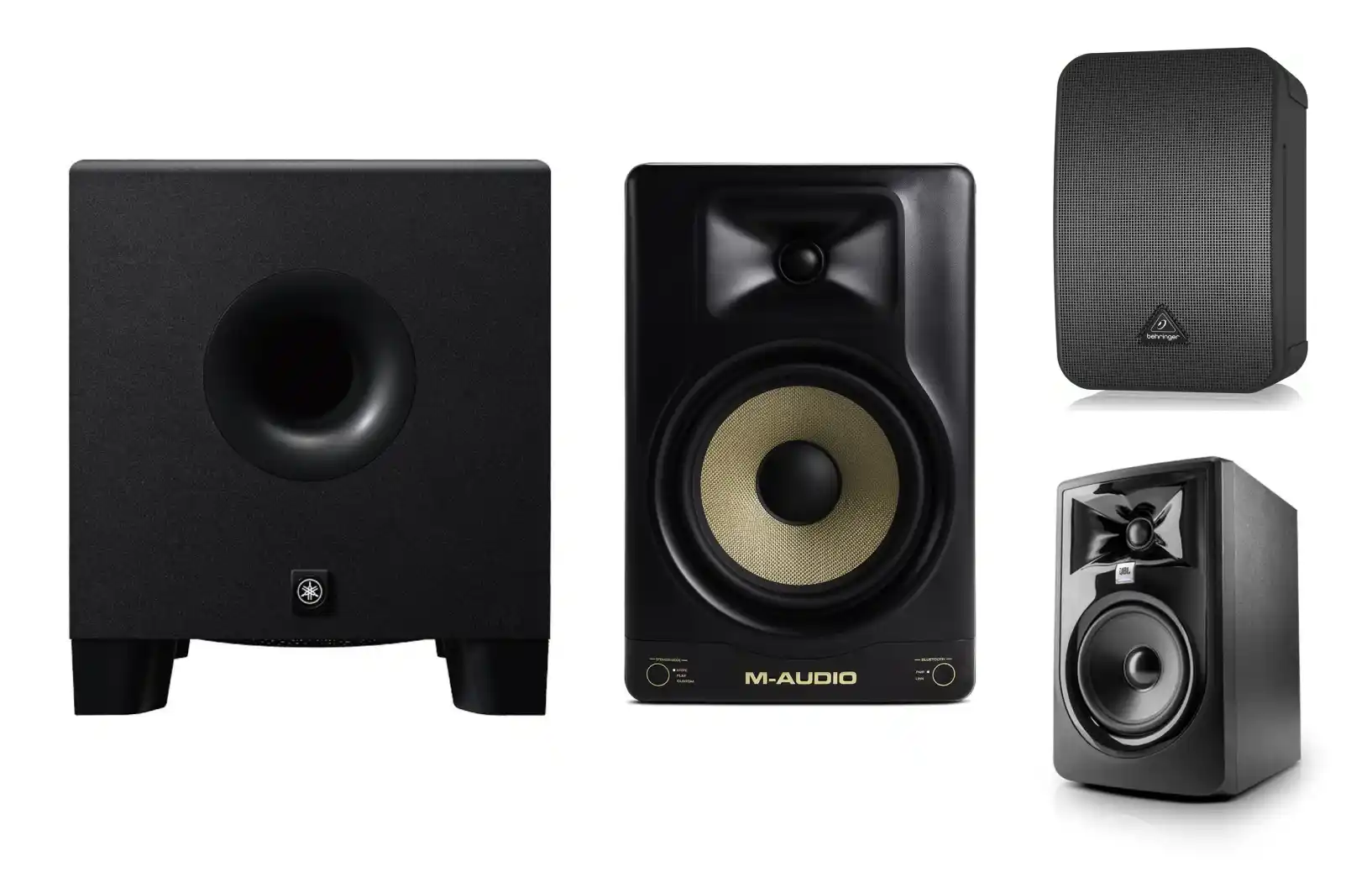
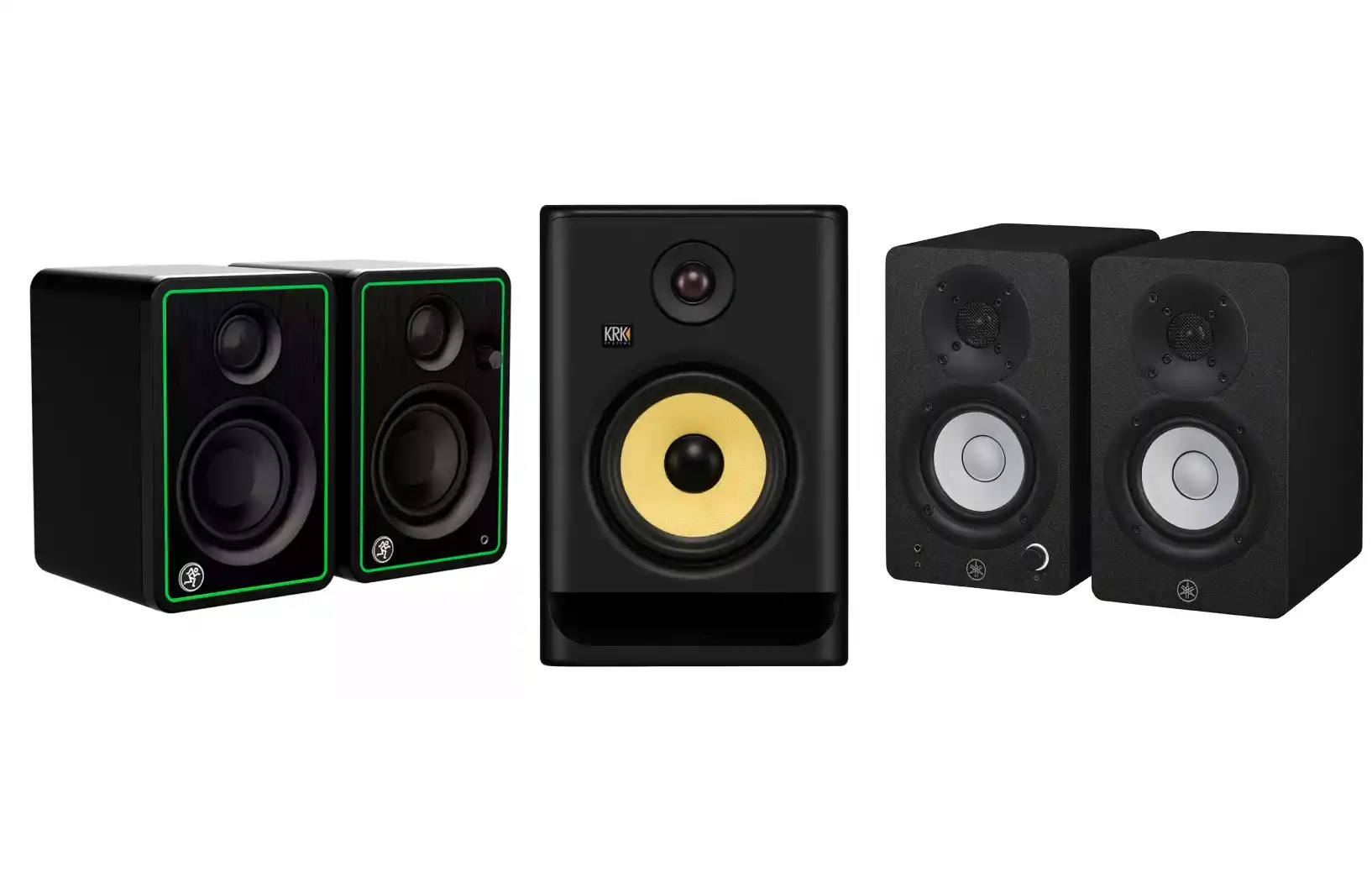
What to Look For When Buying Monitors
- Room size match — small rooms exaggerate bass with large monitors
- Flat frequency response — you want accuracy, not boosted bass
- Nearfield design — monitors should sit close to your listening position
- Connection type — most use TRS, XLR, or RCA inputs
- Room treatment matters — even expensive monitors sound bad in untreated rooms
FAQ
What size studio monitors should I buy?
For most home setups, 5-inch monitors are ideal. They provide enough bass without overwhelming small rooms.
Do expensive monitors make you mix better?
Not automatically. Room acoustics and placement matter more than price. A well-placed mid-range monitor beats a high-end one in a bad room.
Do I need a subwoofer?
Only if you’re doing bass-heavy production and your room is treated. Most home studios don’t need one.
Popular Studio Monitor Brands
Need help choosing monitors?
We can match you to the right setup for your room and budget.