






















How to Choose the Right Reed: Saxophone & Clarinet Sizes, Strengths & Brands
Quick Answer
Reed strength is measured from 1.0 to 4+. Beginners should start on a 2 or 2.5 — soft enough to produce sound easily but firm enough to control tone. Alto sax reeds and tenor sax reeds are not interchangeable; always match the reed to your specific instrument.
Choosing the wrong reed is one of the most common reasons beginners struggle with saxophone or clarinet. Too stiff and you can’t produce sound; too soft and your tone is thin and airy. This guide covers reed sizes, strengths, instrument fit, and the key differences between popular brands like Rico, Rico Royal, and Vandoren.
Reed Strength Guide: What Do the Numbers Mean?
Reed strength refers to how stiff or flexible the reed is. It’s rated numerically — the higher the number, the stiffer and harder the reed is to play:
| Strength | Feel | Best For |
|---|---|---|
| 1.5 | Very soft | Young beginners, small lung capacity |
| 2.0 | Soft | Beginners, first year players |
| 2.5 | Medium-soft | Beginners to intermediate, most recommended starting point |
| 3.0 | Medium | Intermediate players with developed embouchure |
| 3.5 | Medium-hard | Advanced players, fuller tone |
| 4.0+ | Hard | Professional players, jazz, classical soloists |
Which Reed Do I Need? Alto vs Tenor vs Clarinet
Reeds are not universal — each instrument requires its own specific size. Using the wrong reed will not fit your mouthpiece correctly:
Saxophone
Alto Sax Reed
Smaller than tenor reeds. Alto sax is the most common starting saxophone — most school beginners use a size 2 or 2.5 Rico or Vandoren.
Saxophone
Tenor Sax Reed
Larger and wider than alto reeds. Requires more air. Tenor players often start on a 2.5 and move to 3.0 as technique develops.
Clarinet
Bb Clarinet Reed
Narrower and thinner than sax reeds. Most school clarinet players start on a 1.5 or 2.0 and progress to 2.5–3.0 over time.
Clarinet / Sax
Soprano & Bass Reeds
Soprano sax uses a smaller reed similar in feel to alto. Bass clarinet uses a much larger reed. Always confirm your instrument before purchasing.
Rico vs Rico Royal vs Vandoren: What’s the Difference?
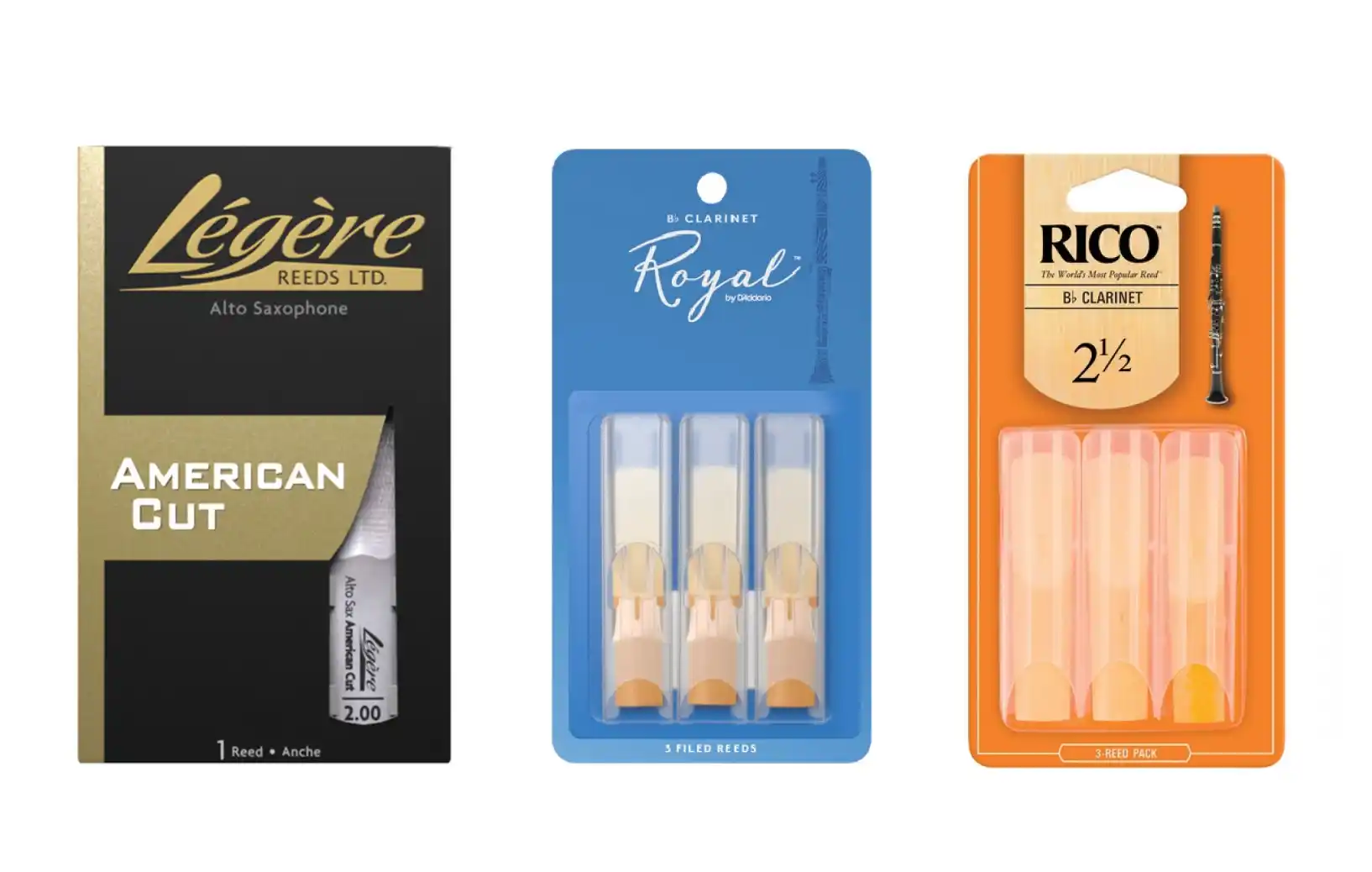
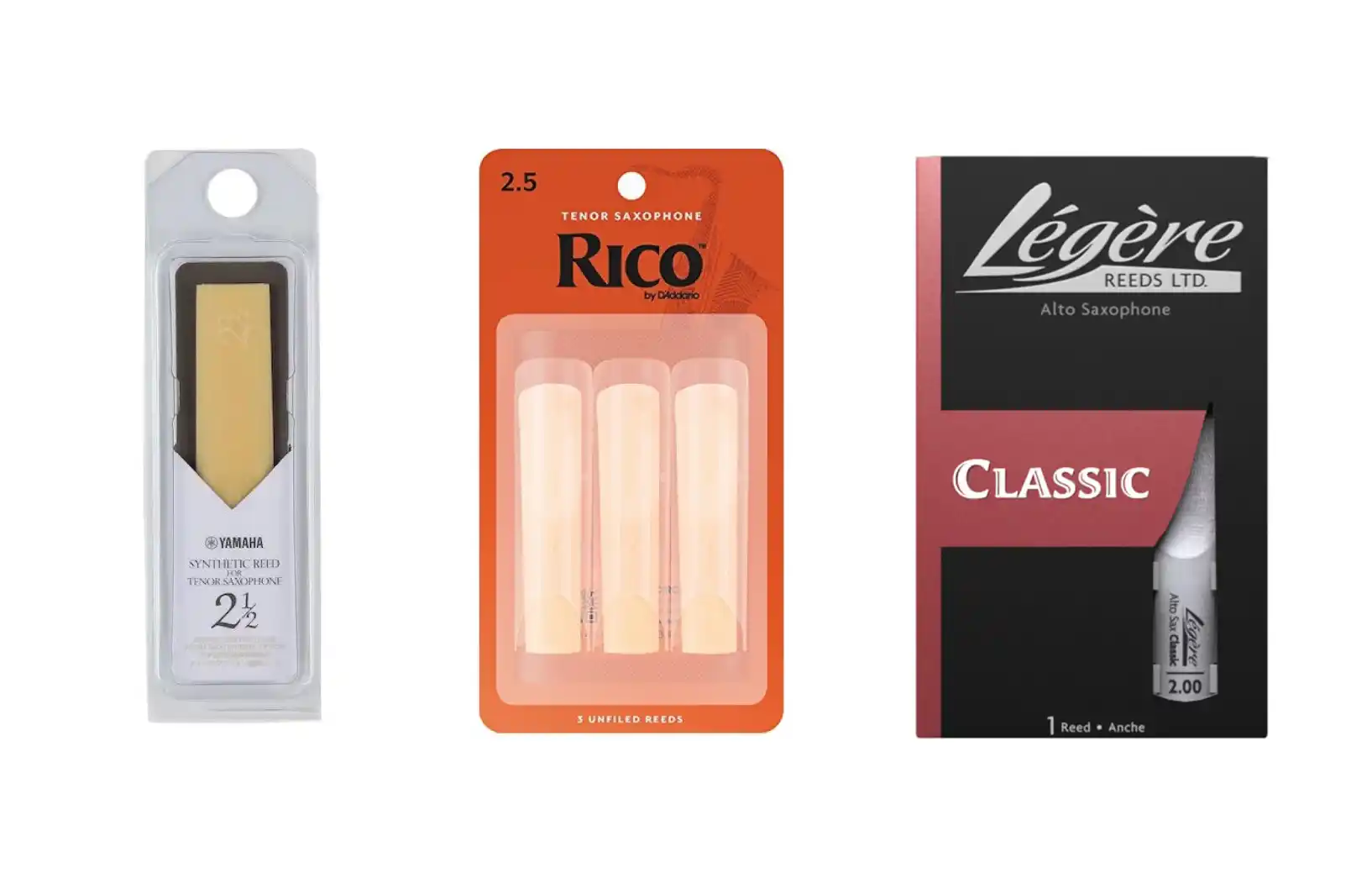
Brand and cut make a significant difference in how a reed responds and sounds. Here’s a plain-language breakdown of the most popular options:
| Brand / Reed | Feel & Response | Best For | Price Point |
|---|---|---|---|
| Rico (D’Addario) | Soft, easy response, unfiled cut | Beginners, school students | Budget-friendly |
| Rico Royal (D’Addario) | Filed cut, more focused tone, slightly stiffer than Rico | Intermediate players stepping up from Rico | Mid-range |
| Vandoren Traditional | Filed cut, warm, centred tone, consistent quality | Classical players, intermediate to advanced | Mid to premium |
| Vandoren V16 / Java | Brighter, more flexible response | Jazz and pop players on alto or tenor sax | Premium |
| Légère Synthetic | Consistent, no break-in needed, durable | Players wanting zero maintenance, gigging musicians | Higher upfront, long-lasting |
Frequently Asked Questions
What reed strength should a beginner start on?
Most beginners should start on a strength 2 or 2.5. A 2 is easier to produce sound on and is ideal for younger players or those just starting out. A 2.5 gives slightly more resistance and is the most commonly recommended starting point for teens and adults.
What is the difference between Rico and Rico Royal reeds?
Rico reeds have an unfiled cut, making them softer and easier to play — ideal for beginners. Rico Royal reeds have a filed cut, which produces a more focused, centred tone and slightly more resistance. Rico Royal is a natural step up once a beginner has developed basic embouchure control.
Can I use an alto sax reed on a tenor sax?
No. Alto and tenor saxophone reeds are different sizes and are not interchangeable. Alto reeds are narrower and shorter than tenor reeds. Using the wrong size will not seal properly on the mouthpiece and will produce little or no sound. Always check your instrument type before buying.
Are synthetic reeds worth it?
Yes, for many players. Synthetic reeds like Légère don’t require soaking, are completely consistent from reed to reed, and last far longer than cane reeds. They’re particularly useful for gigging musicians, students who forget to soak reeds, or anyone in humid or dry climates where cane reeds warp easily.
How long does a saxophone or clarinet reed last?
A cane reed typically lasts 2–4 weeks of regular playing before it starts to degrade — losing response, tone, and flexibility. Most players rotate between 3–5 reeds at a time to extend the life of each. Synthetic reeds like Légère can last several months.
Why do some reeds feel harder or softer even at the same number?
Cane reeds are a natural product and vary slightly from reed to reed, even within the same box. Humidity, temperature, and the specific piece of cane all affect how a reed plays. This is one reason many players try synthetic reeds — they’re completely consistent every time.
What is the difference between a filed and unfiled reed cut?
A filed reed has the bark removed from the heel of the reed, making it more responsive and easier to control. An unfiled reed retains the bark, making it slightly softer and easier to blow for beginners. Rico reeds are unfiled; Rico Royal and Vandoren are filed.
Tips for Getting the Most from Your Reeds
Reed Brands We Stock
These are the most trusted reed brands available for saxophone and clarinet players at every level:
Ready to find your reed?
Browse our full range of saxophone and clarinet reeds — all strengths and brands in stock.