























How to Choose a Guitar Cable: Types, Tips & What to Look For
Quick Answer
For most guitarists, a high-quality 6–10ft instrument cable with good shielding is the best choice. Shorter cables reduce noise and signal loss, while higher-quality shielding improves tone clarity.
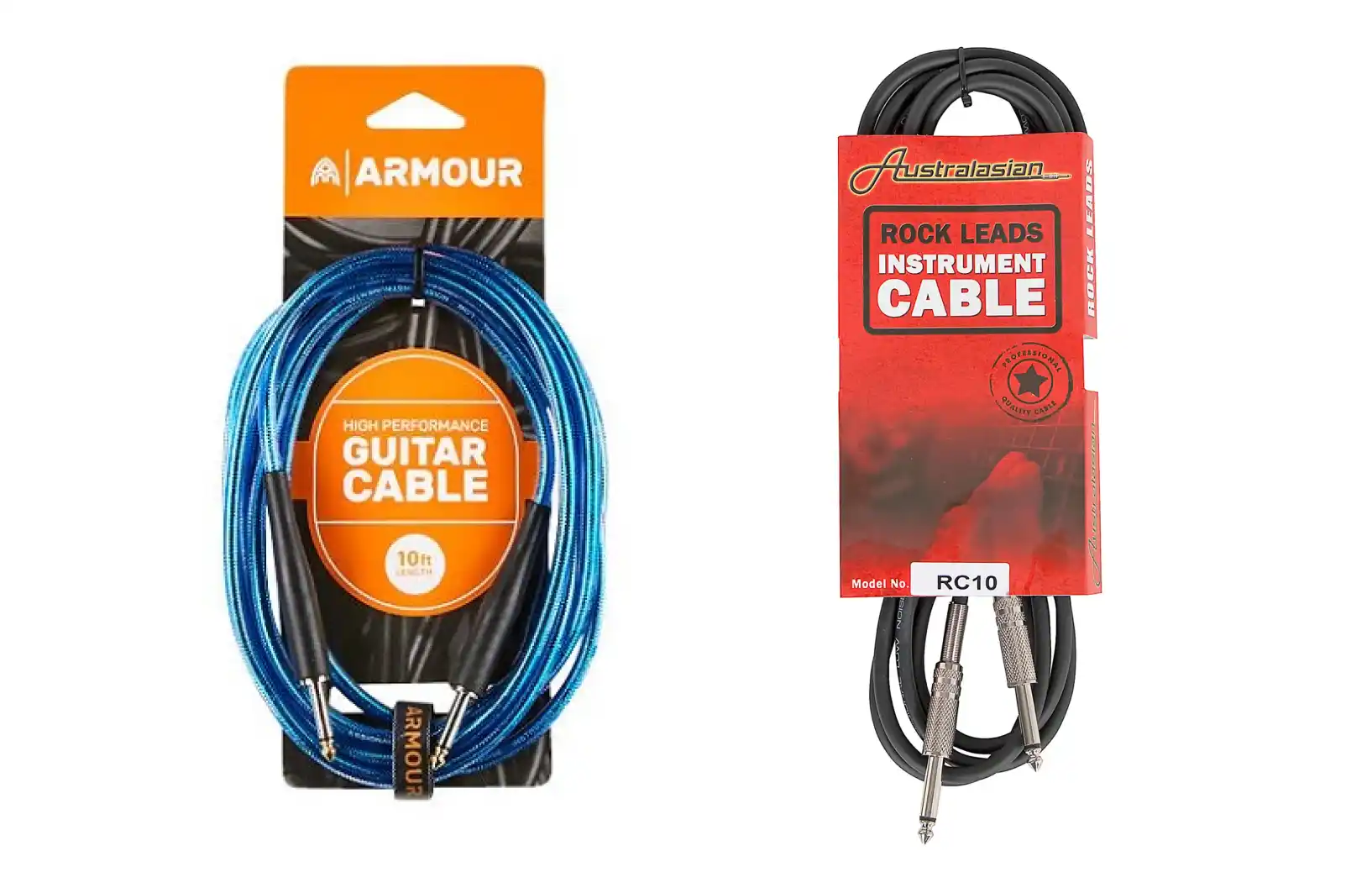
A guitar cable might seem simple, but it plays a huge role in your tone. A bad cable can introduce noise, cut high frequencies, or fail mid-performance. A good one keeps your signal clean and reliable.
What Does a Guitar Cable Do?
A guitar cable carries your instrument signal from your guitar to an amplifier, pedalboard, or audio interface. It also protects that signal from interference and noise.
Types of Guitar Cables
- Instrument Cable (TS) — standard guitar cable used for electric and bass guitars
- Patch Cable — short cables used to connect pedals on a pedalboard
- Balanced Cable (TRS) — used for audio gear and interfaces, not typical guitar output
- Speaker Cable — used between amp head and speaker cabinet, NOT for guitars
Key Things to Look For
| Feature | Why It Matters |
|---|---|
| Shielding | Reduces hum, buzzing, and interference |
| Length | Shorter cables = cleaner signal, less tone loss |
| Connector Quality | Metal jacks last longer and reduce crackle |
| Core Wire | Better copper = better signal clarity |
| Jacket Durability | Thicker rubber protects against stage wear |
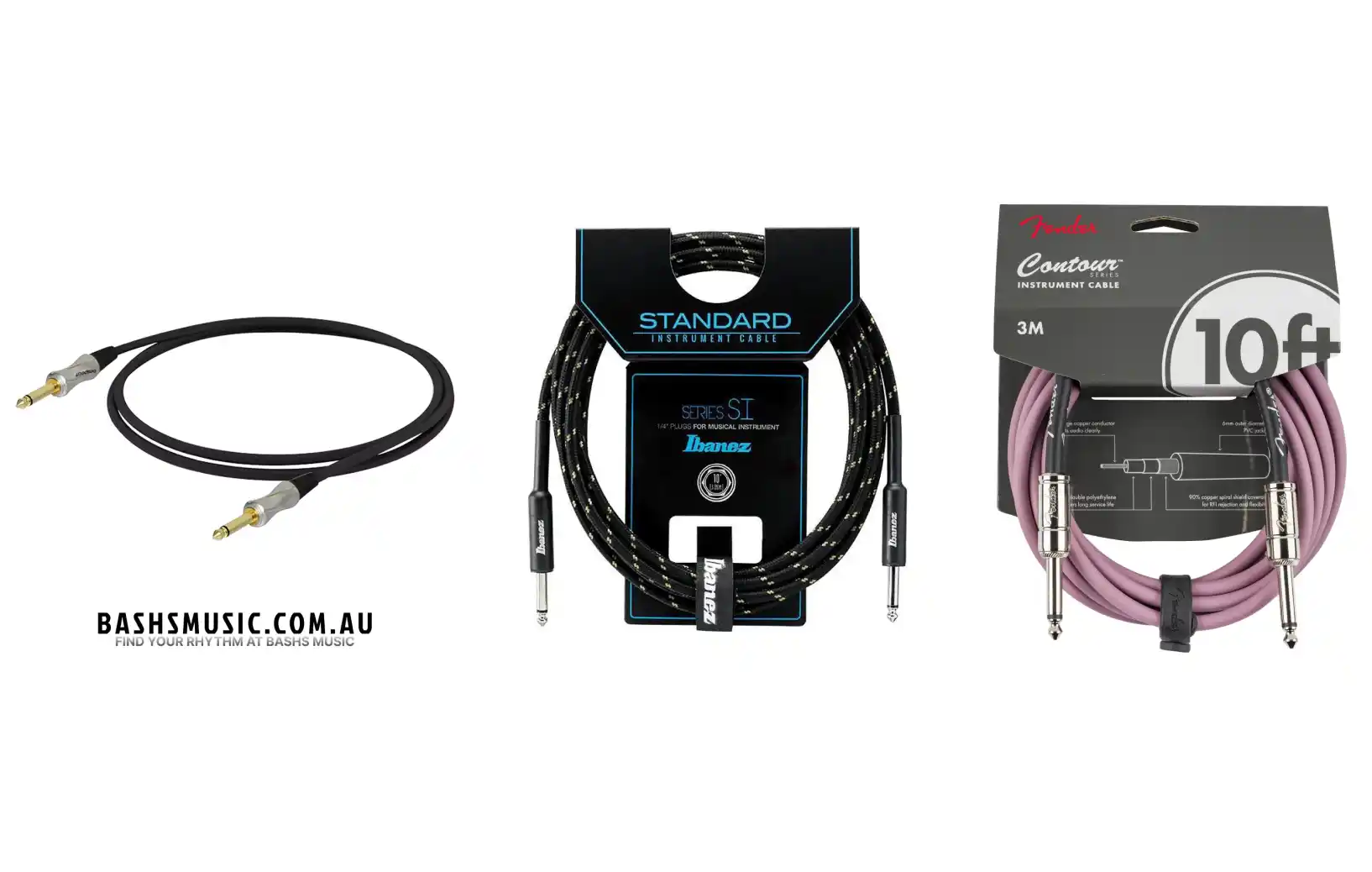
Common Cable Lengths
Choosing the right length helps avoid tone loss and clutter:
- 6ft — best for practice and pedalboard setups
- 10–20ft — standard live performance length
- 25ft+ — stage setups, but more signal loss risk
Frequently Asked Questions
Do expensive guitar cables make a difference?
Yes, to a point. Higher-quality cables reduce noise, last longer, and preserve tone better. However, extremely expensive cables don’t always provide noticeable improvement over mid-range professional cables.
How long should a guitar cable be?
The shorter the better, as long as it suits your setup. Most players use 6–10ft for practice and 10–20ft for live performance.
Why is my guitar cable buzzing?
Buzzing is usually caused by poor shielding, interference from electronics, or a damaged cable. Try a different cable or move away from power sources and lights.
Tips for Choosing a Guitar Cable
Popular Cable Brands
Need a reliable guitar cable?
Browse our range online or ask us for the right cable for your setup.