






















How to Choose a Guitar Capo: Types, Tips & What to Look For
Quick Answer
A capo is a clip that attaches to your guitar’s fretboard to raise the pitch of all strings at once. For most players, a spring-loaded trigger capo is the best starting point — it’s fast, easy to use, and works on acoustic and electric guitar. Choose a capo that fits your neck radius for best results.
A capo is one of the most useful and affordable accessories a guitarist can own. It lets you play the same chord shapes in a different key, match a singer’s vocal range, or get a brighter tone on acoustic guitar. But with so many types available, choosing the right one can be confusing. This guide makes it simple.
What Does a Guitar Capo Do?
A capo clamps across all strings at a chosen fret, acting as a new “nut” and raising the pitch of the entire guitar. This lets you play open chord shapes in any key without learning new chord fingerings. For example, placing a capo on the 2nd fret and playing a G chord shape produces an A chord sound.
Types of Guitar Capo
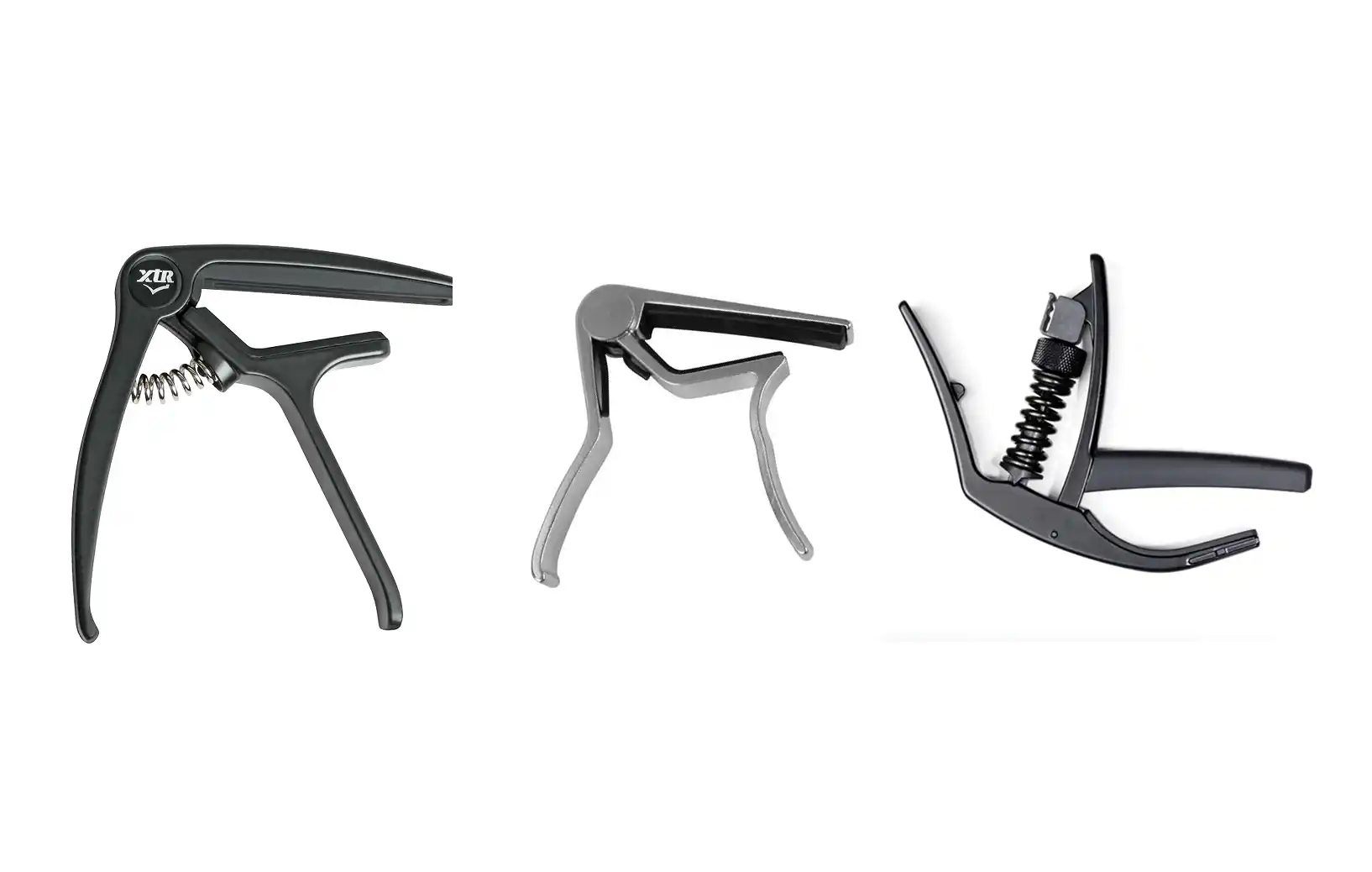
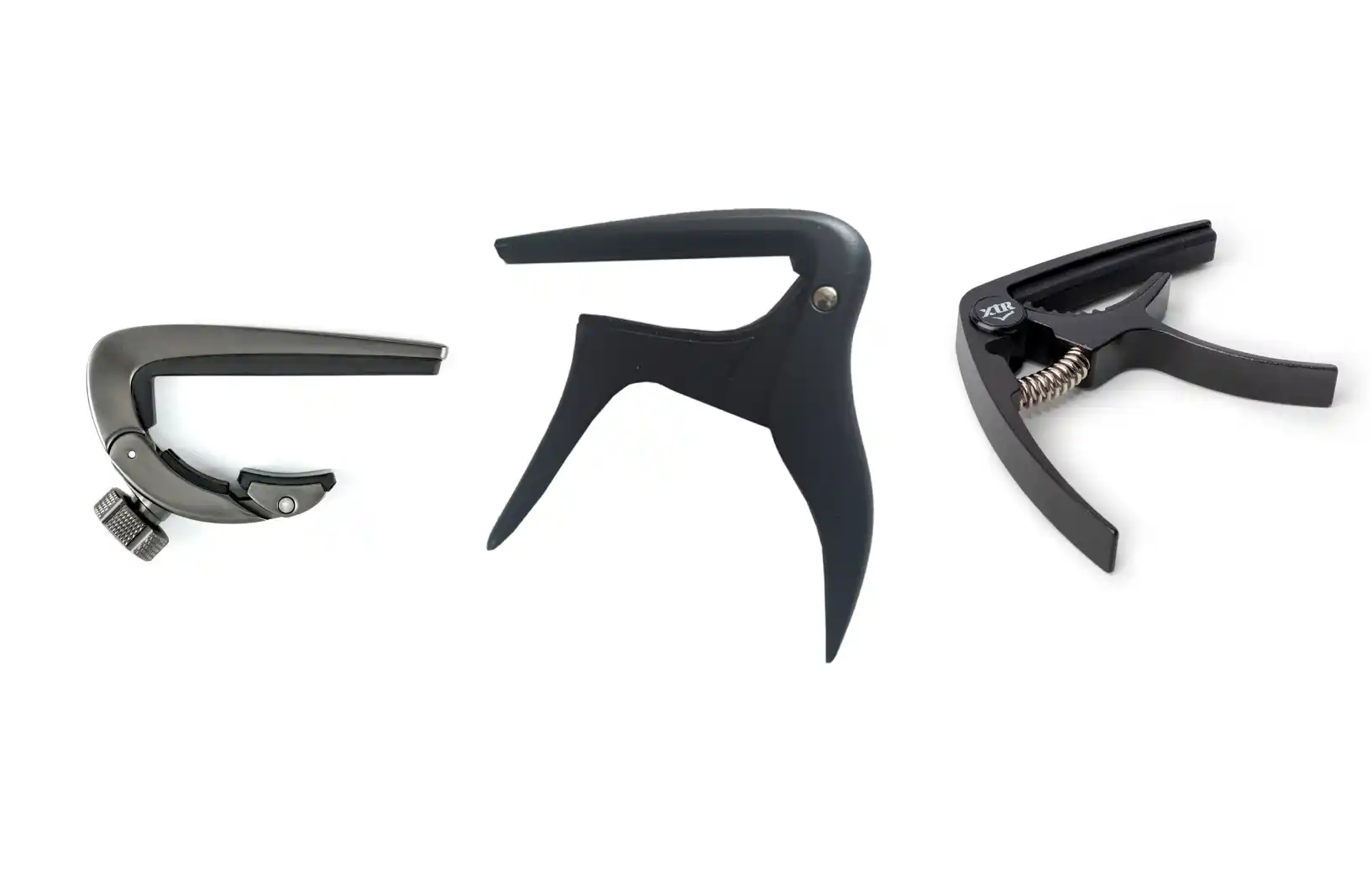
There are four main capo designs — each with different trade-offs in speed, tuning accuracy, and versatility:
Trigger / Spring-Loaded Capo
One-handed operation — squeeze and clip on. Fast for live use but can cause slight tuning issues on some guitars due to uneven pressure.
Screw / Adjustable Capo
Allows you to dial in exactly how much pressure is applied. Takes longer to attach but gives the most accurate, buzz-free tuning.
Partial / Cut Capo
Covers only 2–4 strings instead of all 6. Creates unique open tuning effects and altered chord voicings. Popular with fingerstyle and folk players.
Toggle / Shubb-Style capos use a lever mechanism for controlled, repeatable pressure. They stay in tune reliably and are the preferred choice of many professional guitarists.
Capo Types Compared at a Glance
Use this simple guide to compare the main capo types:
| Capo Type | Speed | Tuning Accuracy | Best For |
|---|---|---|---|
| Trigger / Spring | ⚡ Very fast | Good | Beginners, live gigging, quick key changes |
| Screw / Adjustable | Slower | ⭐ Excellent | Studio recording, players who prioritise tuning |
| Partial / Cut | Moderate | Good | Fingerstyle, folk, open tuning effects |
| Toggle / Lever | Fast | ⭐ Excellent | Professionals, regular use, all genres |
What to Look for When Buying a Capo
Beyond the type, a few key details determine whether a capo will work well on your specific guitar:
- Neck radius compatibility — acoustic guitars have a flatter radius than electric guitars. Make sure the capo is designed for your guitar type to avoid string buzz.
- String spacing — classical guitars have wider necks than steel-string acoustics. A capo too narrow will miss the outer strings.
- Build quality — cheap capos can scratch your fretboard or lose tension over time. Aluminium or aircraft-grade models are more durable and worth the extra cost.
- Tension control — too much pressure pushes strings sharp; too little causes buzz. Adjustable capos let you find the sweet spot for your guitar.
- Finish compatibility — some rubber pads can leave marks on nitrocellulose finishes over time. Check the pad material if your guitar has a vintage or nitro finish.
Frequently Asked Questions
What is a guitar capo used for?
A guitar capo clamps across all strings at a chosen fret to raise the pitch of the guitar. It lets players use familiar open chord shapes in different keys, match a singer’s vocal range, or achieve a brighter tone — all without retuning the guitar.
What capo is best for beginners?
A trigger-style (spring-loaded) capo is the best choice for beginners. It attaches and removes with one hand, is affordable, and works on most acoustic and electric guitars. Dunlop and D’Addario both make reliable trigger capos that are popular with beginners and experienced players alike.
Can I use the same capo on acoustic and electric guitar?
Not always. Acoustic and electric guitars have different neck radii — acoustic necks are generally flatter. Many capos are designed for one or the other. Some brands sell “universal” capos that work on both, but checking the spec before buying is important to avoid string buzz.
Does a capo affect guitar tone?
Yes. Placing a capo higher up the neck produces a brighter, more jangly tone — this is why capos are popular in folk, pop, and singer-songwriter music. The capo shortens the vibrating string length, which naturally brightens the sound and gives it more sparkle.
Will a capo damage my guitar?
A quality capo used correctly will not damage your guitar. However, leaving a capo on the same fret for extended periods can cause fret wear or put unnecessary tension on the neck. Always remove the capo when you’re done playing and store it somewhere that won’t scratch your guitar’s finish.
What fret should I put a capo on?
This depends on the key you want to play in. The most common positions are frets 1 to 5 for acoustic guitar. Each fret raises the pitch by one semitone — so a capo on the 2nd fret raises the guitar by a whole step. Many guitarists keep a capo chart handy when starting out.
Capos We Recommend
These are a few of the capo styles we stock, with options for classical, acoustic, and trigger-style use:
Xtreme GPX52B Classical Guitar Capo
A simple classical capo option for wider necks and everyday use.
Ashton CP10 Acoustic Trigger Capo
Fast one-hand operation. Great for beginners and live players who need quick key changes between songs.
D’Addario Planet Waves NS Artist Capo
Precise tension control for buzz-free tuning. Ideal for studio recording or players who want the best possible intonation.
Tips for Using a Capo
Popular Capo Brands
These brands make some of the most widely used and trusted capos on the market:
Need help picking the right capo?
Browse our full range in store or online — our team can match you to the right capo for your guitar and playing style.
Need help choosing the right capo?
Browse our full range online or contact our team for advice on acoustic, electric, or classical guitar capos.