























Which Guitar Pick Should I Use? A Complete Guide to Thickness & Material
Quick Answer
For most beginners, a medium pick (0.60–0.80mm) is the best starting point — it works for strumming and basic lead playing across acoustic and electric guitar. Thin picks suit strummers; thick picks suit lead players and bassists.

A guitar pick seems like a simple thing — but the thickness, shape, and material all change how your guitar sounds and feels to play. Whether you’re just starting out or looking to refine your tone, this guide breaks it all down clearly.
Guitar Pick Thickness: Which Should You Choose?
Pick thickness is measured in millimetres (mm) and is the single biggest factor in how a pick feels and sounds:
0.40–0.60mm
Light / Thin
Flexible and forgiving. Best for acoustic strumming and beginners. Produces a bright, airy tone.
0.60–0.80mm
Medium
The most versatile option. Works for strumming and lead playing on both acoustic and electric.
0.80–1.5mm+
Heavy / Thick
More control and attack. Preferred by lead guitarists, rock players, and bassists.
Guitar Pick Thickness Guide by Playing Style
Not sure which thickness suits you? Use this as your reference:
| Thickness | Best For | Tone Character |
|---|---|---|
| Thin (0.40–0.60mm) | Acoustic strumming, beginners, folk | Bright, warm, flexible feel |
| Medium (0.60–0.80mm) | All-round play, beginner to intermediate | Balanced tone and control |
| Heavy (0.80–1.2mm) | Electric lead, rock, blues, pop | More attack, fuller tone |
| Extra Heavy (1.2mm+) | Metal, shredding, bass guitar | Maximum control, dark tone |
| Jazz III style (1.38mm small) | Fast lead playing, jazz, shred | Precise, articulate |
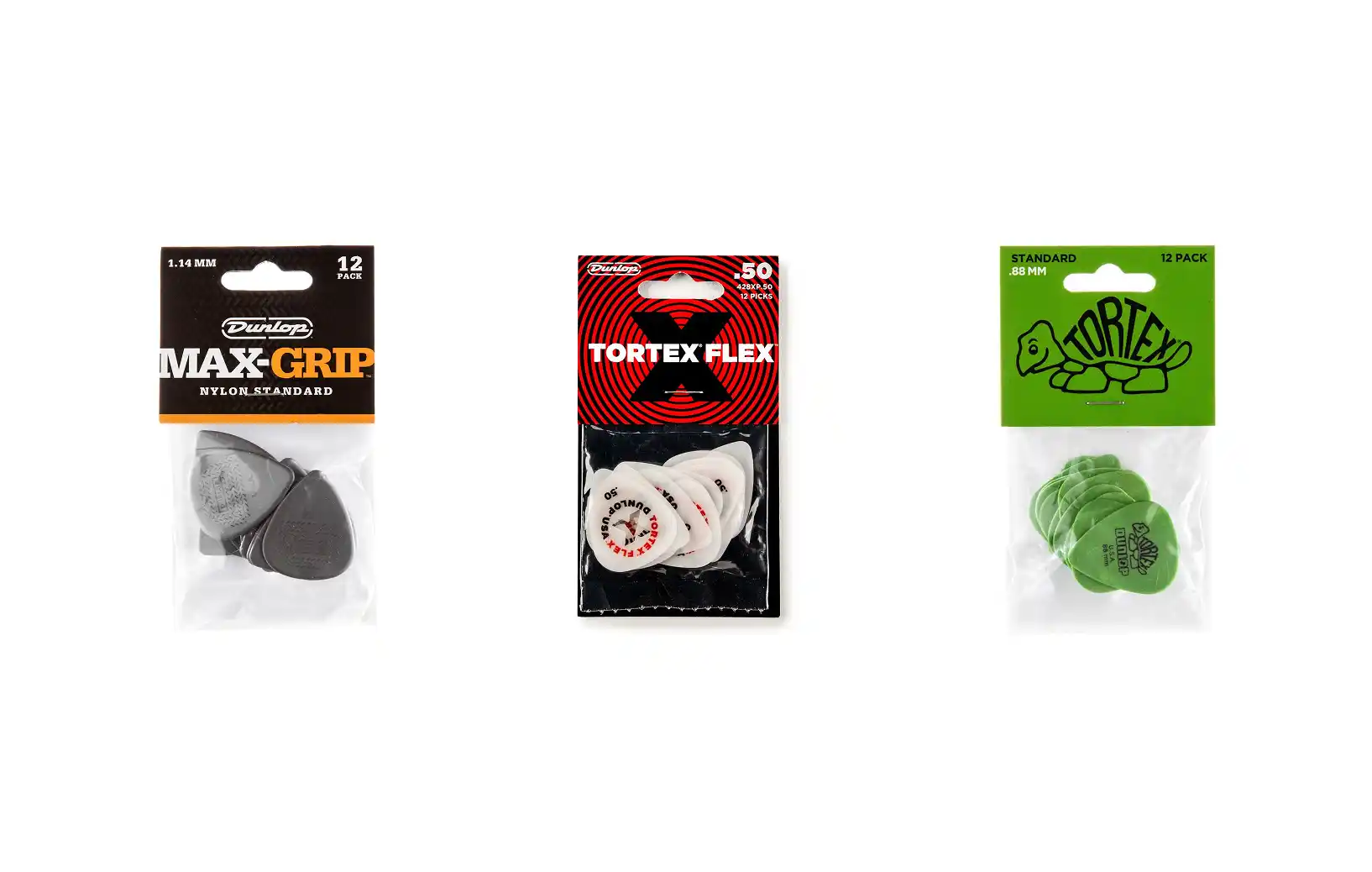
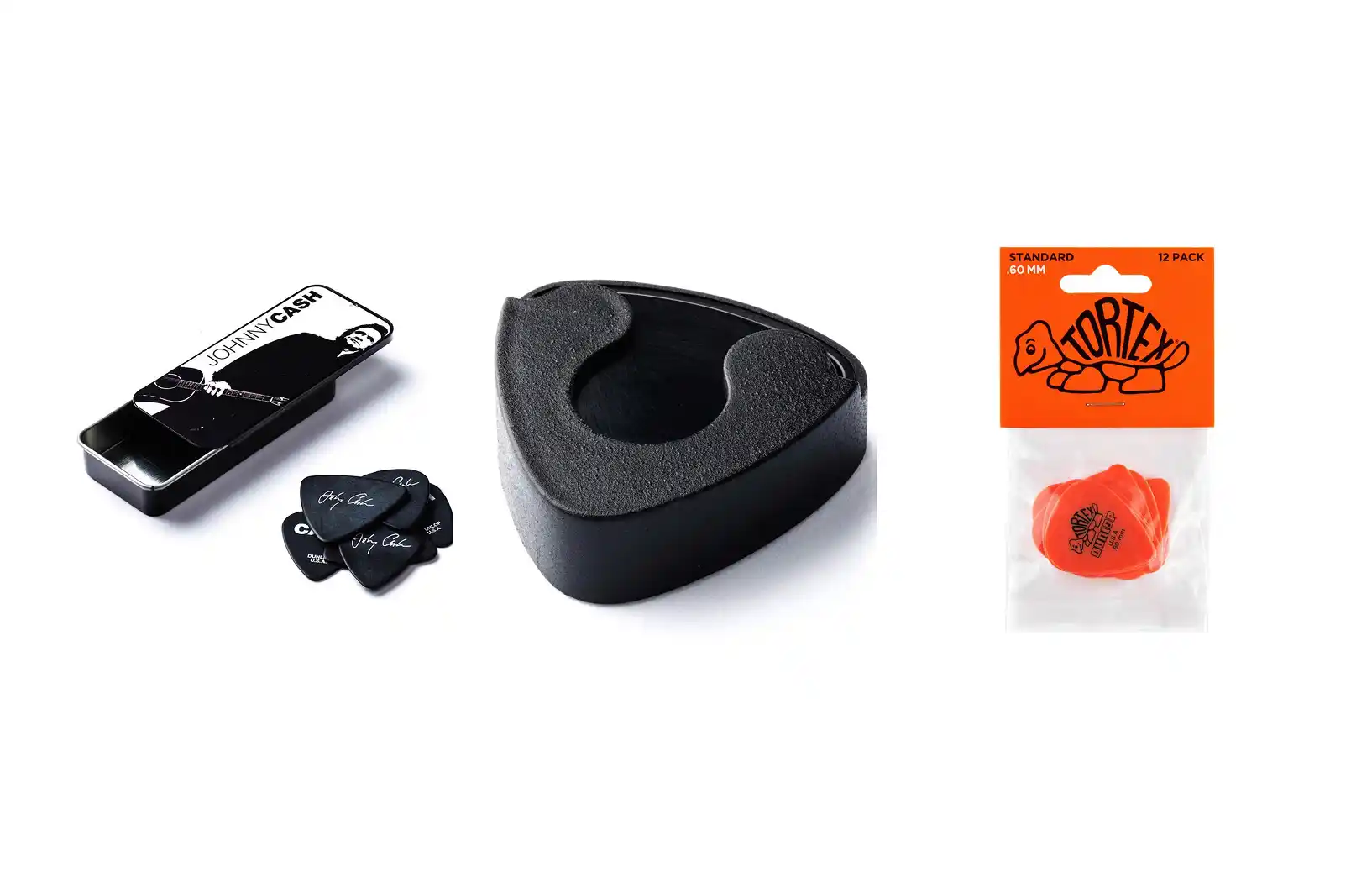
Does Guitar Pick Material Matter?
Yes — material affects grip, tone, and durability. Here are the most common types:
- Celluloid — the classic pick material. Warm tone, slight flexibility, available in every thickness. The most common starting point.
- Nylon — smooth and grippy. Very popular for acoustic and fingerstyle. Produces a softer, rounder attack than celluloid.
- Delrin / Acetal — stiff, durable, consistent. Preferred by many electric and lead players for its precision.
- Tortex — Dunlop’s most popular pick material. Matte finish for grip, bright attack, holds its shape well. Excellent all-round choice.
- Ultex / Carbon — premium materials for fast playing. Bright, articulate tone with excellent durability. Favoured by experienced lead players.
Frequently Asked Questions
What guitar pick thickness is best for beginners?
A medium pick (0.60–0.80mm) is the best starting point for most beginners. It’s flexible enough for strumming but firm enough to give feedback when picking individual notes. If you’re mainly strumming an acoustic, a thin pick (0.40–0.60mm) is also a great option.
Does pick thickness affect guitar tone?
Yes. Thinner picks produce a brighter, airier sound with a softer attack — great for acoustic strumming. Thicker picks give more control and a fuller, more defined attack — preferred for electric lead and rock playing. The difference is especially noticeable on acoustic guitar.
What pick do most professional guitarists use?
Most professional guitarists use medium to heavy picks (0.73mm–1.2mm), with Dunlop Tortex and Dunlop Jazz III picks being two of the most widely used. However, pick preference is personal — many pros experiment until they find what works for their style and instrument.
Should I use a different pick for acoustic vs electric guitar?
Generally yes. Acoustic players often prefer thinner, more flexible picks for strumming because they’re easier on the strings and produce a warmer sound. Electric players tend to use heavier picks for more control and attack when playing leads or riffs.
What is the best pick for strumming chords?
For strumming chords — especially on acoustic guitar — a thin to medium pick (0.40–0.73mm) in nylon or celluloid is ideal. The flexibility allows the pick to glide across all strings smoothly without getting caught, which makes chord playing feel more natural.
How many guitar picks should I own?
Most guitarists keep at least 5–10 picks on hand at any time — picks get lost easily. It’s also worth having two or three different thicknesses so you can experiment and switch between strumming and lead playing sessions.
Tips for Choosing and Using Guitar Picks
Popular Guitar Pick Brands
These brands are trusted by beginners and professionals alike and cover every thickness and material:
Picks We Stock
Not sure where to start?
Browse our full range of guitar picks in store or online — or ask our team and we’ll point you in the right direction.